




Easily import from anywhere.
Bring your plan in from a spreadsheet, Notion, Trello, Asana, Monday.com or ClickUp. Map the columns once, and statuses, dates and media come with it.
Up to 1,000 posts per import. On every plan.


Find ideas, plan the month, create in your brand's voice, get sign-off, publish everywhere and see what worked. One workspace, not a stack of apps.
Bring your existing calendar with you, show work to anyone, and connect the AI tools you already use.
Bring your plan in from a spreadsheet, Notion, Trello, Asana, Monday.com or ClickUp. Map the columns once, and statuses, dates and media come with it.
Up to 1,000 posts per import. On every plan.
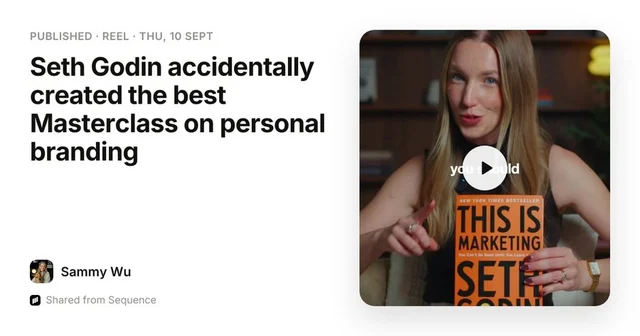
Share a post, a project or a report with a link. Your founder, your legal team or a partner sees exactly what you choose, behind a passcode if you like.
Viewing needs no account.


Connect Claude, ChatGPT or Codex over MCP, or build on the API. You choose the brands and permissions each one gets, and it can only publish approved posts, after you confirm.
MCP and API are in beta and part of Pro.
Three of our Trustpilot reviewers, in their own words and under their own names.
“This platform meant I got rid of Notion and my scheduler, and I can even do all the media reviews with clients in one place. It's super simple to use and all my clients have found it easier to navigate aswell.”
 Sam Trustpilot · Australia
“Sequence helps you to streamline the whole process and even allows you to post to multiple different platforms at once so you don't have to manually upload it every time.”
 Jeremy Trustpilot · Australia
“Being in the content creation space, this software has solved my biggest issue of having to use so many different softwares in my workflow whether that be scripting or content delivery. Now, I can ideate, script, revise videos, and post videos all in one platform!”
 Josh Parkes Trustpilot · Australia
From the first idea to the monthly numbers, without moving the work between apps.
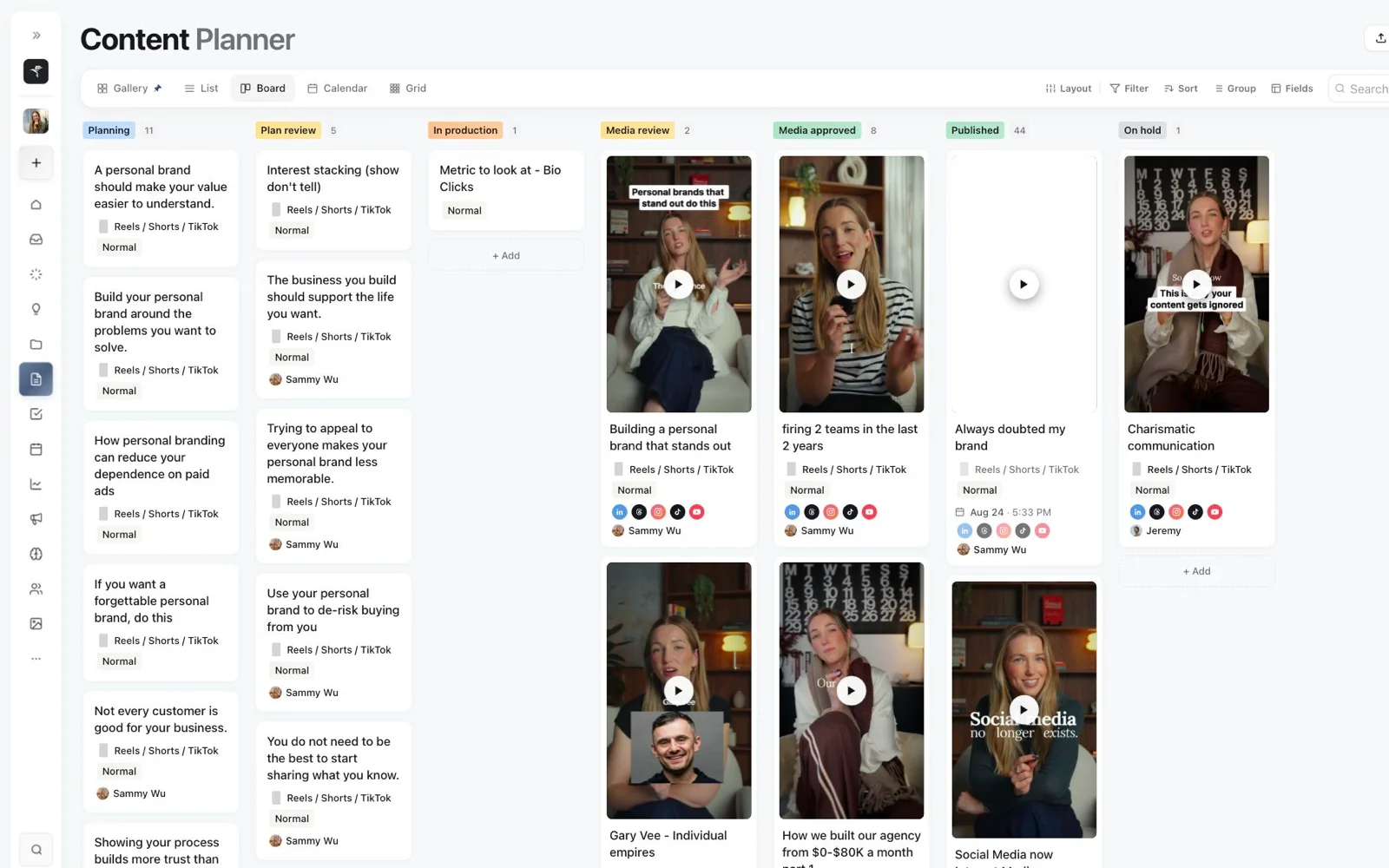
Every post with its owner, status, format and date, as a board, a table or a calendar. Save the posts worth learning from and turn the good ones into drafts on the same plan.
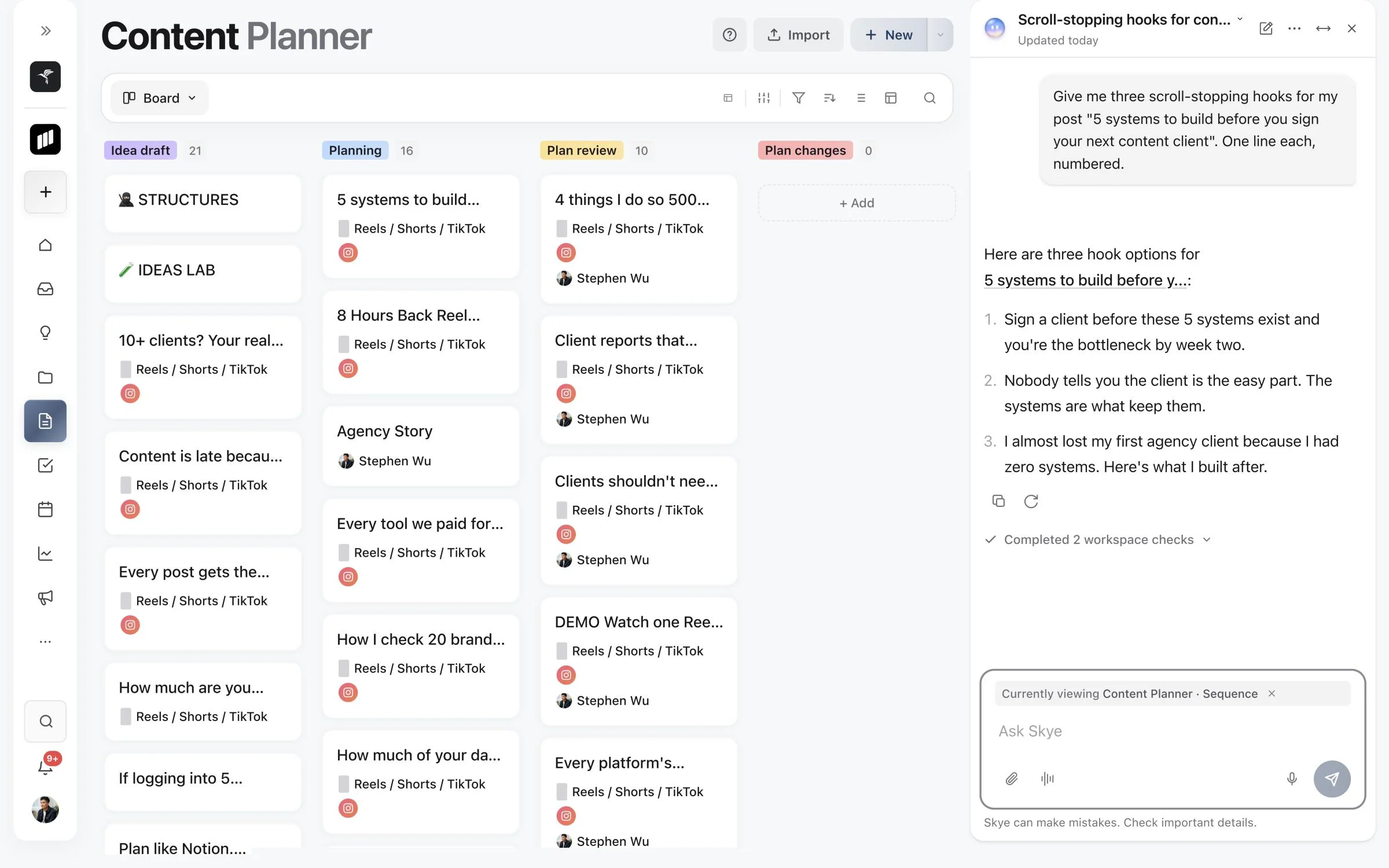
Brand Brain holds what your brand stands for, who it talks to and how it sounds. Skye, your content assistant, uses it to draft hooks, scripts and captions in your voice, right beside the post.
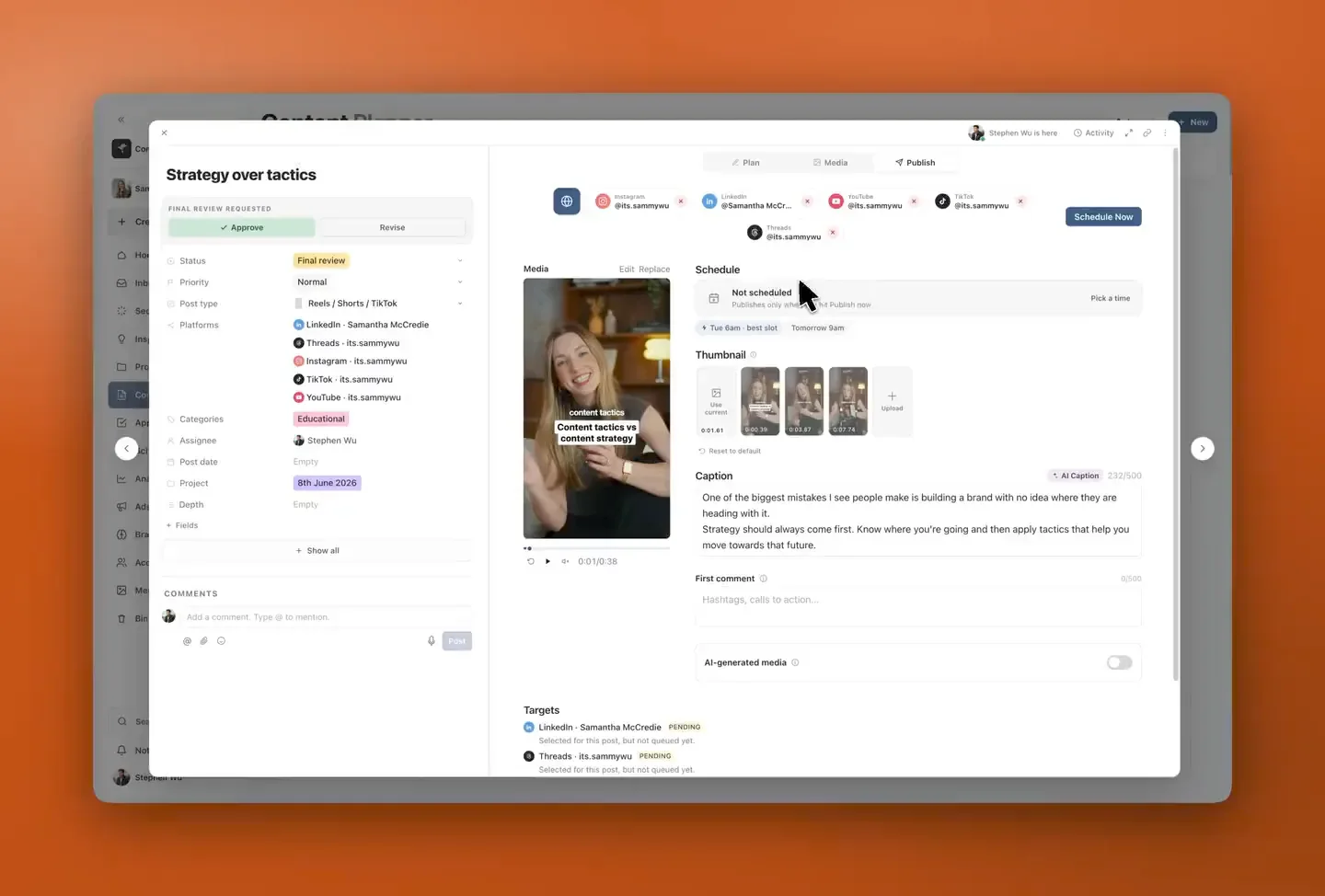
One calendar for every channel, per-platform captions and previews, and video converted into the format each platform wants. Then the results land beside the posts that earned them.
Reply to your audience, read the numbers and find the next best slot, beside the post that earned them.
Reply to Instagram, Facebook, YouTube, X and Threads in one place, with the post's numbers beside the thread. Voice messages and GIFs included.
Skye reads your pipeline, your brand and your numbers. When it wants to change a post, it shows the exact change and waits for Allow.
Someone comments your keyword and gets your offer in a DM, then leaves their email. New DMs get a welcome message. Instagram and Facebook, on Pro.
Drag and resize tiles, charts, best posts and platform comparisons, for organic, ads or a single platform.
Sequence learns when each brand's posts perform, and the publish tab offers that slot in one click.
Daily, weekly or monthly to up to ten people. Or publish a live link, or save a PDF.
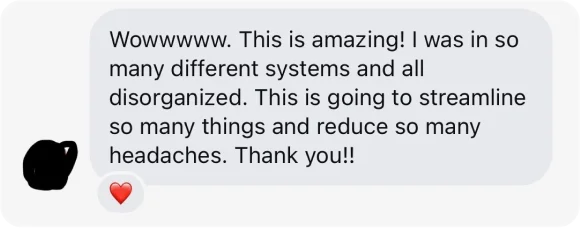
Real reviews and messages, exactly as they came in.
![Direct message (names redacted): Hi Sammy, it’s [redacted]! I’m [redacted]. I just wanted to say.. (and excuse my language and advance), But what a f😘king product you guys have created. I’ve only just been playing around this morning but it literally is all the shit house problems I’ve been facing with Poppy, Rella or with notion just resolved into one platform. ❤️](https://content.sequencesocial.com/site/responsive/v1/3b47c540c75de1bd81195142/595.webp)
100% worth it
I don't normally post reviews like this, but I manage over 500 pieces of content every single month and this platform is the best one I've ever used.
I used to plan everything and collaborate with clients in Notion and then have to move it all into a scheduler. I've tried all the big scheduling platforms, but I've never really loved any of them.
This platform meant I got rid of Notion and my scheduler, and I can even do all the media reviews with clients in one place. It's super simple to use and all my clients have found it easier to navigate aswell.
If you're managing a lot of content and want a clean, easy-to-use platform that can handle the whole content workflow and publishing process, this is 100% worth it.
Sam
Australia

THIS APP COOKED!!!
Managing my content across socials feels so much easier now. I didn't even realize I needed it until I tried, and now I'm hooked.
Harper
Philippines
Great to have everything in one
Great to have everything in one. Team are super responsive to feedback. Has improved our operations.
Shaun Cunningham
Australia
We were early adopters of sequence social
We were early adopters of sequence social. This software is category leading for social media management. My team have gained great efficiencies at a great price. It’s replaced a bunch of apps and brought them into one ripping package. The team behind it are super stars too. Highly recommend.
Mark Kevin
Australia
What an amazing platform
What an amazing platform. It has streamlined our day to day work and given our clients an incredible experience.
And the customer service is top tier. The platform is very new and has had some minor (and I mean minor) bugs but the response time is less than minutes and the fix feels just as quick.
If you’re looking for a platform to streamline your business or even just your personal pages, I would highly recommend this one.
Tahlia Hadfield
Australia
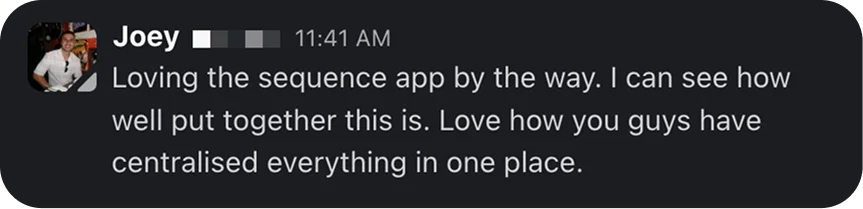
If you manage and create content, use Sequence!
Sequence is honestly amazing! The way that the software has been built is very well thought out. As someone who plans, scripts and post content, it makes the whole content creation process so easy. I used to use google docs to plan out my videos but it was very messy.
Sequence helps you to streamline the whole process and even allows you to post to multiple different platforms at once so you don't have to manually upload it every time.
Would definitely recommend to anyone who wants a better way to create and publish content!
Jeremy
Australia
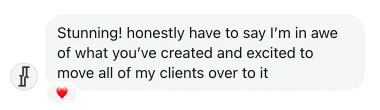
Great app
Great app! Cutdown my workflow significantly and super user friendly! Highly recommend
Angela Zhou
Australia

The all in one content software
Being in the content creation space, this software has solved my biggest issue of having to use so many different softwares in my workflow whether that be scripting or content delivery. Now, I can ideate, script, revise videos, and post videos all in one platform!
Josh Parkes
Australia

I genuinely haven’t felt this excited...
I genuinely haven’t felt this excited about a software or new tech for quite some time now 👥
For what I’ve been able to do with Sequence..., freaking solves so many of the messy problems creatives and the content teams deal with every day.
- Can finally operate stress-free and not paying at least $100 dollars on other subscriptions for content management,distribution, organization, planning... it´s everything in there, on my own dashboard!
(Loved Sequence far more than when I tried Notion the first time ... that’s... quite the deal team!)
You made me want to create more and keep building the brand... can’t thank you enough for that! 🫡
Creativ Studios
Mexico
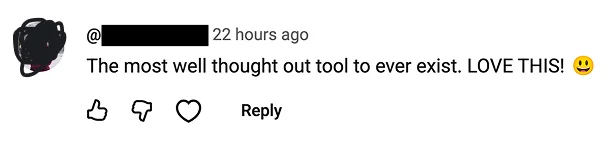
What an incredible app
What an incredible app! It is just so good to see and manage everything to do with ads and organic in the one place and it’s so easy to use!!
Steven Gorgis
Australia
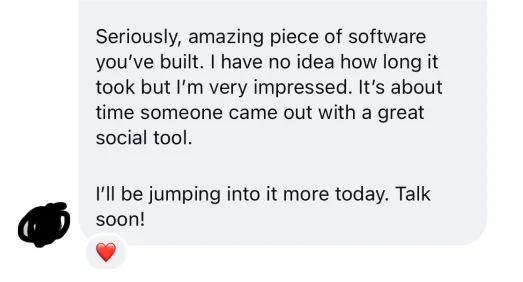
I had an awesome experience using it
I had an awesome experience using it! Seamlessly organised, great customisability, cool interface. Literally I'd give it 5 stars for every aspect of it.
Vincent Capalit
Philippines
Amazing platform
Amazing platform. It has completely transformed the way our company runs socials. Buy it and try it!!
Francesca Hayes
Australia

Ideas, planning, creation, publishing and results in one workspace. Start free with one brand, no card needed.
No. A single brand can run everything in Sequence: ideas, planning, AI drafting in your voice, approvals, publishing and analytics. Agencies use the same workspace across many brands.
No. Import your existing calendar from a spreadsheet, Notion, Trello, Asana, Monday.com or ClickUp. Titles, captions, dates, statuses and media come across.
Yes. Invite colleagues with one of four roles, from Viewer to Brand admin, or send a Share with anyone link to people who only need to look. Pro includes unlimited members.
Free Forever covers one brand, one connected account and 5 scheduled posts. Pro starts at $29 USD a month and adds approvals, custom statuses and unlimited members.
Sequence is social content operations software for agencies, social teams, and their clients. We built it so planning, media review, client approval, publishing, inbox, and analytics live in one shared workspace, and a post keeps its context from first idea to published result.
Sequence is for agencies, in-house social teams, and the clients who approve their work. Your team runs the operation across every brand, your clients review and approve posts, and everyone sees only what they should.