Agency social reporting clients actually read
Build agency social reports around the decisions clients care about, using an always-current shared view and goal-specific metrics.
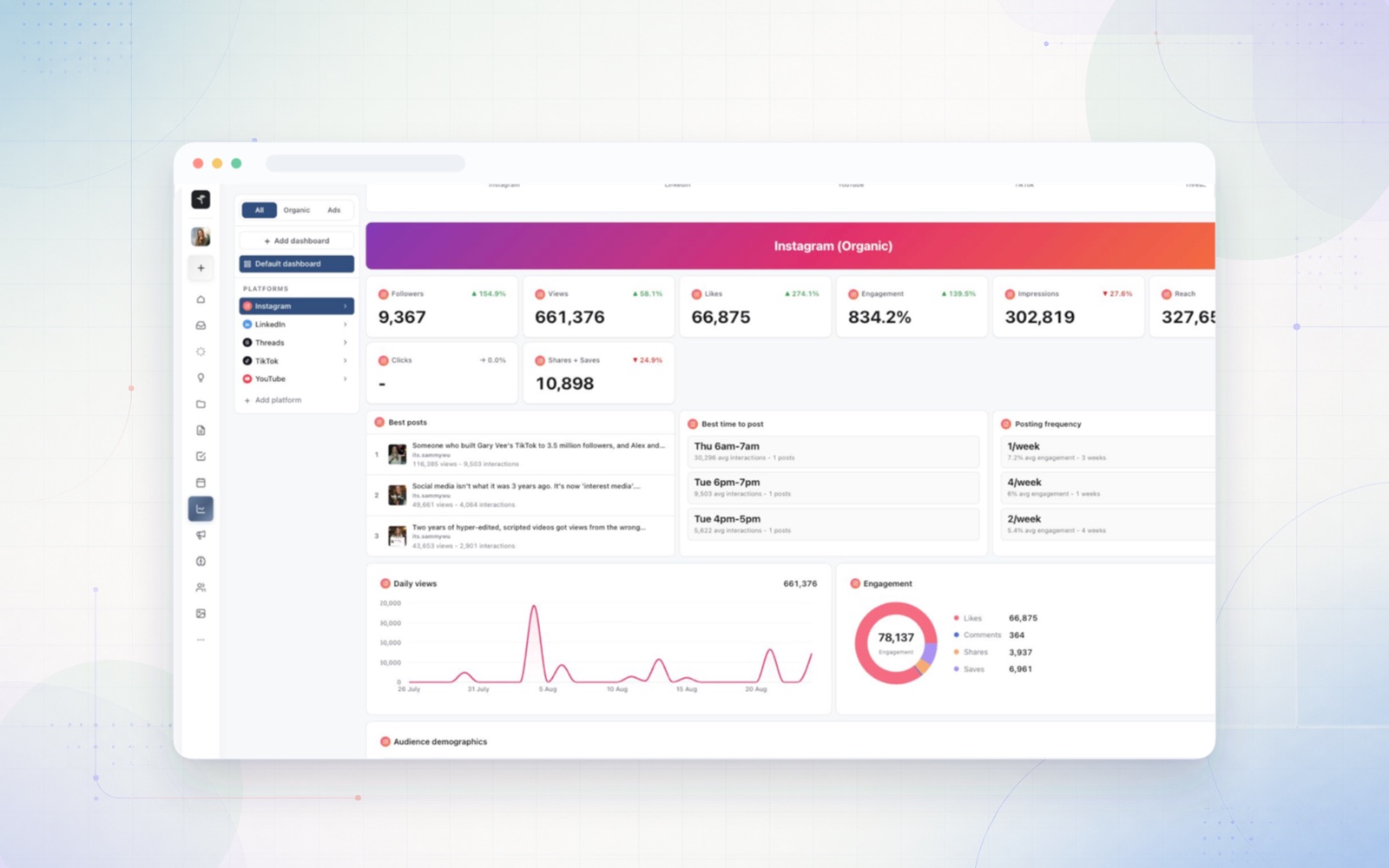
A monthly social report can take hours to assemble and minutes to ignore. The problem is rarely a lack of charts. Most decks contain more numbers than a client can use, repeat information that was already visible during the month, and arrive after the useful moment for a decision has passed. Clients usually need three answers: what went out, what worked, and what changes next. A report designed around those questions becomes part of the operating conversation rather than a record filed away. The format can then get simpler. Live performance provides the evidence, while the agency brings interpretation, recommendations, and a clear connection to the next content plan.
Why monthly decks go unread
Exported decks separate performance from the work that produced it. A chart shows reach rising, but the client cannot see the posts, campaign choice, or creative pattern behind the movement. The account lead has to rebuild that context in notes, and the reader has to move between the report and the content calendar to verify it.
Decks also encourage reporting by availability. If a platform exports twelve metrics, all twelve find their way onto a slide. The result looks thorough but gives every number equal weight. A client scanning between meetings cannot tell which movement matters, which is normal variation, or which one requires a decision.
Finally, a static report ages immediately. A deck prepared on Monday may be presented on Friday after more content has published. Questions raised in the meeting lead to another export, another calculation, and a follow-up email. The agency spends its time maintaining the snapshot instead of interpreting the work.
Answer the three client questions
Start with what went out. Summarise the publishing cadence, channels, campaign themes, and any material changes from the agreed plan. This is not a list of every caption. It is an account of delivery that lets the client see whether the work matched the intended priorities.
Then explain what worked. Name the posts, formats, themes, or hooks that contributed most strongly to the agreed goal. Include underperformance when it changes the learning. Avoid presenting a top-post gallery without explaining whether a result came from a repeatable creative choice, unusual timing, paid support, or an external event.
Finish with what changes next. Each recommendation should alter a real planning choice: repeat a format, test a different opening, reduce a low-value theme, change the channel mix, or gather more evidence before acting. A concise report with two defensible decisions is more useful than a long report that ends with no change.
Replace the export cycle with a shared view
An always-current shared view lets the client inspect progress between reporting meetings. It should connect the publishing plan, live posts, and performance without requiring a new file each month. The agency can still define a reporting period, but it no longer needs to rebuild the basic record to begin analysis.
Shared does not mean unexplained. The client needs clear metric definitions, suitable filters, and a visible distinction between incomplete and complete periods. The agency should add short observations where context matters, especially when a campaign launched late, a channel changed its measurement, or one unusually large result affects the total.
This model changes the value of the monthly deliverable. Instead of sending a finished deck for passive reading, the agency maintains a trustworthy performance surface and uses the meeting to interpret it. In Sequence, analytics sit beside the plan in the same shared workspace the client already uses, keeping results near the content and decisions they inform.
Run the monthly conversation with live data
Open with the goals and the decisions carried forward from the previous month. Then review delivery against the plan before discussing outcomes. This order prevents a high-performing outlier from hiding missed priorities, and it separates whether the agency completed the intended work from whether the audience responded as expected.
Move from the account view to a small number of representative posts. Compare a strong result, a weak result, and one useful experiment. Ask what differed in the creative, audience need, format, timing, and distribution. Treat the data as evidence for a hypothesis, not proof that one variable caused the outcome.
Close by recording two or three actions in the next plan, with an owner and a review point. If the client asks a question the current view cannot answer, name the limitation and follow up with a focused analysis. Do not fill the gap with a confident story that the data does not support.
Choose metrics that match the goal
For awareness, focus on reach, impressions, video views with an appropriate watch threshold, and frequency where it is available and relevant. Add audience growth carefully. Follower change can provide context, but it should not stand in for whether the intended audience actually encountered the campaign.
For engagement, use meaningful interactions in relation to exposure. Comments, shares, saves, replies, and engagement rate can reveal different forms of interest. Separate lightweight reactions from actions that show stronger intent, and compare like with like across formats rather than averaging every post into one benchmark.
For conversion, report the actions closest to the business outcome that tracking can support: qualified clicks, landing page sessions, leads, purchases, or another agreed event. State the attribution window and known gaps. Social reporting is strongest when the agency makes the measurement boundary clear, then connects the available evidence to a practical next decision.