A social media approval process template for agencies
A copyable social media approval process for agencies, with clear roles, post states, review SLAs, revision limits, and rules for quiet clients.
A social approval process should tell everyone what happens next without requiring an account manager to translate it. The creator needs to know when work is ready. The reviewer needs a focused quality check. The client needs one clear decision. When those responsibilities are left implicit, posts collect comments but do not move forward. This template gives agencies a practical starting point: three named roles, seven visible states, service levels for each handoff, and simple rules for silence and revisions. Copy it, adjust the timings to your delivery model, and agree it with the client.
Assign three roles before work starts
Name a creator, reviewer, and client approver for every content cycle. The creator produces the caption, creative, links, tags, and channel details. The reviewer represents the agency and checks the post against the brief, brand rules, accuracy requirements, and publishing plan. The client approver makes the final decision on behalf of the client organisation.
Several people can contribute expertise, but each role needs one accountable owner. A designer and copywriter may both create. Legal or product specialists may leave comments. That does not change who owns the handoff. The creator resolves production notes, the reviewer consolidates internal feedback, and the client approver resolves conflicting client opinions before returning a decision.
Record a backup for the reviewer and approver. Holidays and urgent work should not make the process unknowable. The decision should still be recorded in the same place as the post.
Move every post through seven states
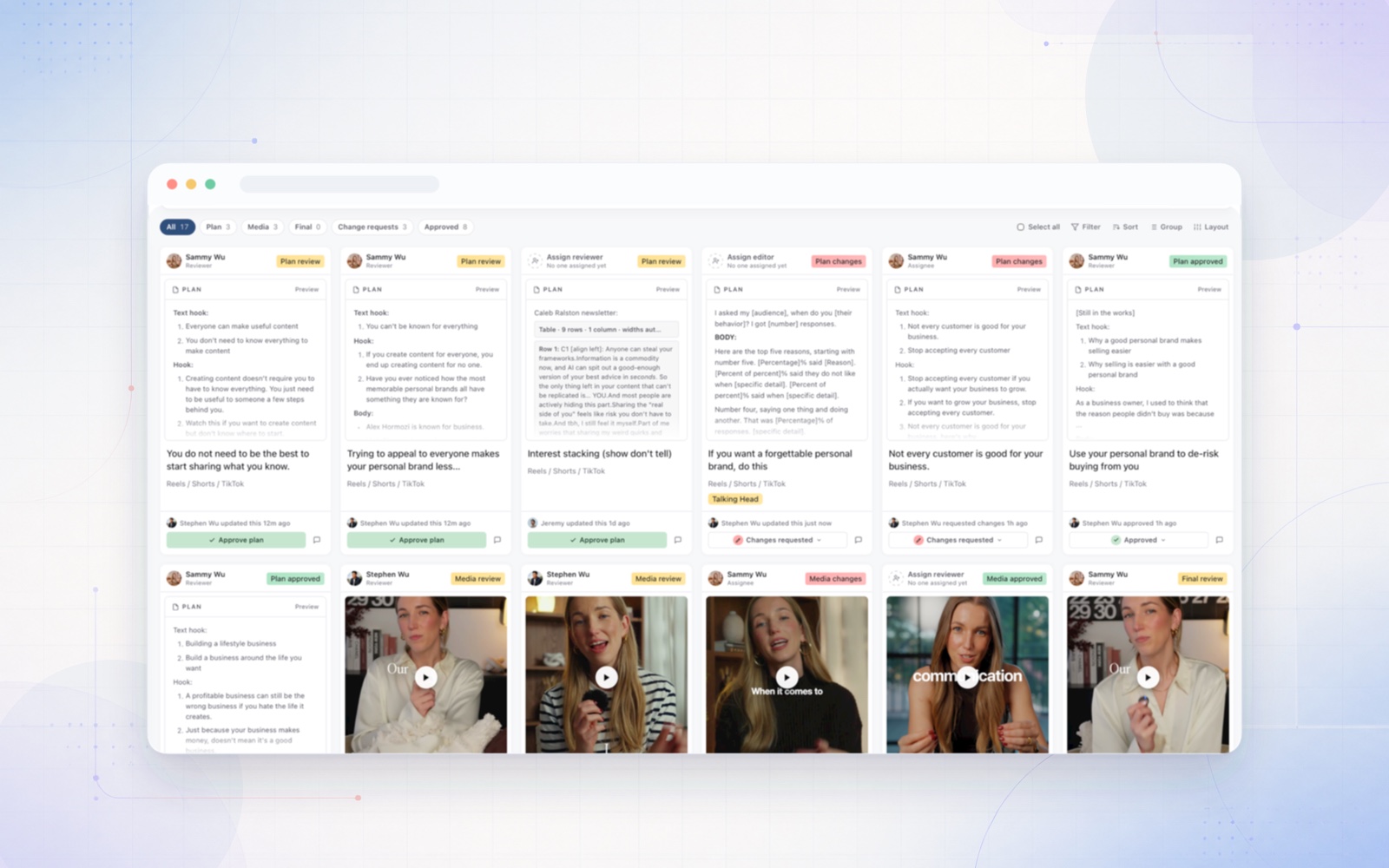
Use the same state sequence for routine work: draft, internal review, client review, changes requested, approved, scheduled, and published. Draft belongs to the creator. Internal review begins when the post is complete enough for an agency decision. Client review begins only after the reviewer has checked the full post, so the client is not being asked to find unfinished work.
Changes requested means the creator owns the next action. Once changes are complete, the post returns to internal review if the request affects meaning, claims, creative direction, or timing. Minor corrections can return directly to client review when the reviewer has agreed that route. Approved means the client has signed off on the complete version, not simply left a positive comment.
Scheduled confirms that the approved version has a publishing time. Published confirms that it went live. Do not skip approved because a deadline is close, and do not use scheduled as a substitute for approval. Each state should describe a fact and identify the current owner.
Set service levels for each handoff
A workable starting SLA is one business day for internal review, two business days for client review, and one business day for the creator to complete a standard revision round. Allow another business day for final client confirmation after changes. Schedule approved posts at least one business day before publication, unless the agency and client have agreed a faster process for reactive content.
Measure each SLA from the moment a complete post enters the relevant state. If the reviewer receives missing assets, or the client is still waiting for a confirmed offer, the clock has not started. Make the missing requirement visible instead of allowing an incomplete handoff to consume the review window.
Put deadlines on the post and include them in one review summary. A useful message says what is ready, who must act, and when the decision is due. Avoid sending a stream of reminders about individual posts when one grouped review request would give the client a clearer workload.
Use a quiet-client rule
Agree the silence rule during onboarding, not after a deadline is missed. Send one reminder halfway through the client review window and a final notice when the SLA expires. The final notice should identify the affected posts and the next safe publishing date. Silence should never be treated as approval unless the client has explicitly authorised that model in writing.
When the deadline passes, keep the post in client review and move its planned date. Tell the client what changed without adding blame: approval was not received by the agreed cutoff, so the post has moved to the next available slot. This protects the agency from publishing unapproved work and makes the consequence predictable.
For time-sensitive content, agree an exception path in advance. The client can nominate a backup approver, reduce the scope to a pre-approved format, or cancel the post. The agency should not invent consent because an event date is approaching.
Control revision rounds without becoming rigid
Define a revision round as one consolidated set of client feedback on the submitted version. Include a fixed number in the scope, often two for routine content, and require the client approver to combine stakeholder notes before each round begins. Separate comments sent on different days still belong to the same round only if work has not started on the earlier set.
Distinguish corrections from new direction. Fixing an agency error does not consume a round. Changing an approved brief, adding a new deliverable, replacing the core message, or revisiting a previously accepted direction is a scope change. Pause the post, explain the effect on timing and fees, and obtain agreement before continuing.
Review the pattern monthly. Repeated late changes may signal that the brief needs stronger examples or that the real decision maker is joining too late. Sequence models the workflow states on the post itself, so creators, reviewers, and client approvers can see the current owner and decision in context. Whatever system you use, keep the process visible enough that exceptions remain exceptions.